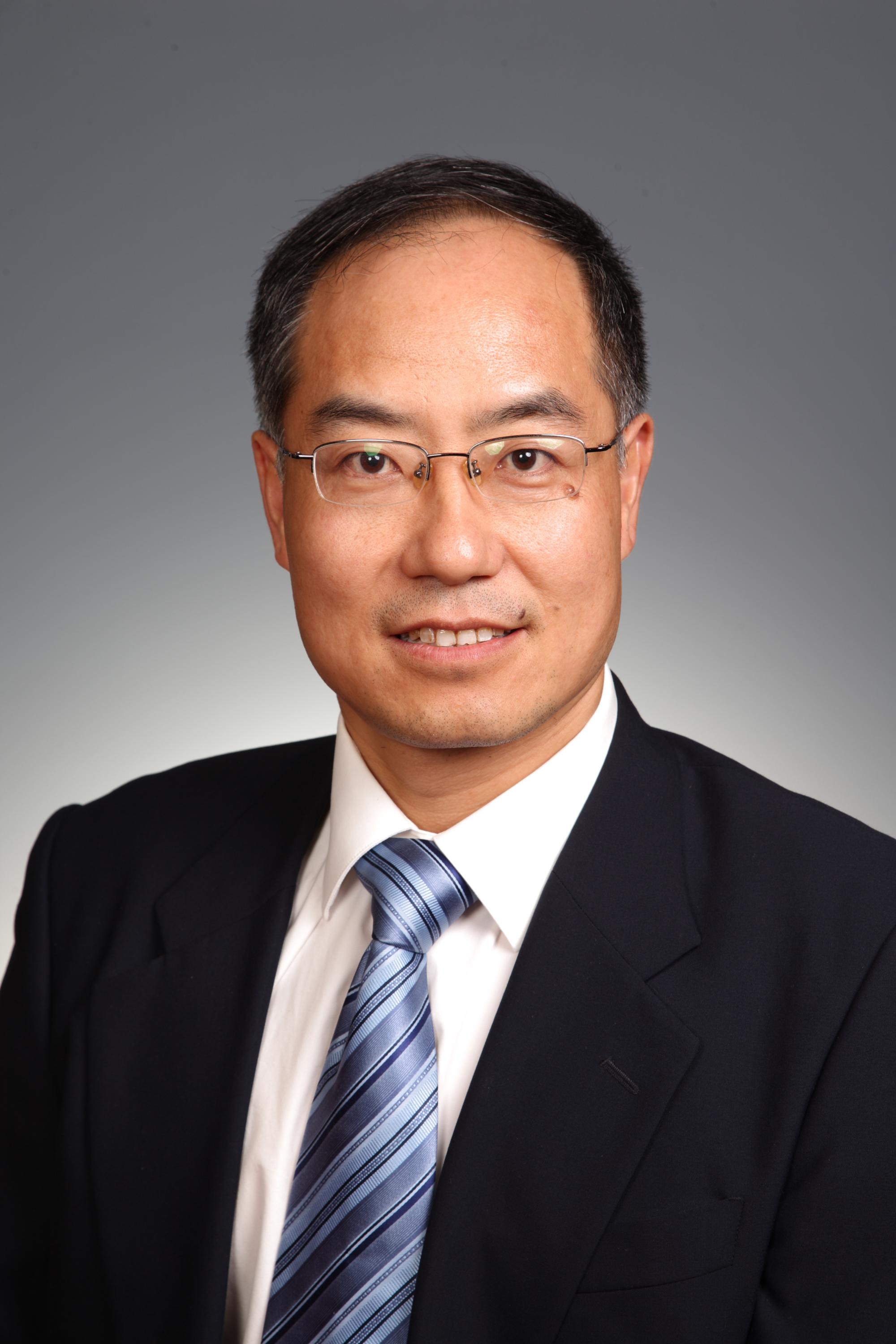
Prof. Yutian Liu 🏛︎︎Shandong University Prof Yutian Liu received his Ph.D from Xi'an Jiaotong University, China, in Electrical Engineering in 1994. He has been a full professor since 1996 and the distinguished professor of Shandong University since 2019. He was the "Taishan Scholar" professor of Shandong Provincial Government from 2009 to 2018. He also was an expert of the Special Government Allowances of the State Council of China and the "Talents Project" of Ministry of Personnel of China. Research areas of Dr. Liu are electrical power system analysis, optimization and stability control, AI application to smart grid and new type power systems. He published 3 books and 300 more papers, and has been granted 40 patents. Title: Whole process restoration of new type power systems Along with the rapid increase of renewable energy, power electronics and AC/DC coupling degree, this leads to severe challenges for the restoration control. To handle the strong uncertainty during restoration, a data-model hybrid driven sequential decision method is adopted to balance flexible restoration resources for step-by-step whole-process optimization. Highlight: Power outage scenarios generation based on generative artificial intelligence and power outage reasoning via large language model, Coordinated control for long-term stable operation of wind-photovoltaic-storage hybrid new black-start source, Dynamic decision making method of load recovery based on flexible interaction of multiple subjects and bidirectional support of transmission and distribution power networks. |
Prof. Weili Li 🏛︎︎Beijing Jiaotong University Prof Weili Li (Ph.D., Professor, Doctoral Supervisor), Longjiang Scholar, recipient of the State Council Special Government Allowance. He was selected as a World's Top 2% Most Cited Scientist in 2022 and 2024, ranks in the top 1% in China by H-index, and has been recognized as a CNKI Top 5% Highly Cited Scholar. He has long been engaged in research on multi-physics field coupling analysis of turbine generators and synchronous condensers, with his work on heating and ventilation cooling of electrical machines reaching internationally leading levels. He previously served as the Director of the "Large Electrical Machine Electrical and Heat Transfer Engineering Research Center" (a National & Local Joint Laboratory), and as a member of the National Key Laboratory of Offshore Wind Power Generators and the National & Local Joint Engineering Laboratory for "Performance Optimization Technology of New Energy Vehicle Motor Systems". He has led or participated as a key member in more than 20 national research projects, including the National 863 Program, National Major Special Projects, National Key Technology R&D Program, and National Key R&D Plan of China, achieving remarkable outcomes. As the first principal investigator, he has received one First Prize of the Science and Technology Progress Award from the Ministry of Education of China, one First Prize of Provincial Technological Invention Award, and fifteen Second Prizes. He has published over 70 SCI Q1 papers and more than 30 papers in Proceedings of the CSEE, the top Chinese journal in the field of electrical engineering. He holds over 130 patents, including both domestic and international patents. Title: Key Technologies of Air-Cooled Synchronous Condensers for Enhancing Voltage Stability in New Power Systems: Rotor Cooling, End Shielding, Fast Response, and Insulation Life Prediction Under China's energy transition and "dual carbon" strategy, large-scale renewable energy integration has highlighted power system voltage stability issues. Synchronous condensers greatly enhance dynamic voltage support and serve as the "ballast" of new power systems. Air-cooled condensers, being safe, reliable, easy to maintain, and cost-effective, are the main type of generator-condenser equipment. However, they face key challenges: poor rotor ventilation and cooling, lack of optimal design methods, severe end heating, limited leading-phase depth, and rapid insulation aging. Supported by multiple national projects, the team has overcome critical technologies including a novel rotor ventilation cooling structure, magnetically conductive alloy shielding, electromagnetic-thermal optimization design, and multi-factor insulation life prediction under harsh operating conditions. 1. Rotor cooling: A novel alternating radial ventilation structure and its fluid network model were developed. The design features and cooling characteristics were studied, solving the winding overheating and thermal imbalance of traditional dual radial duct structures, effectively reducing rotor hot-spot temperature and thermal imbalance coefficient. Under the same temperature constraint, the condenser can deliver an additional 20.4 Mvar of reactive power, providing a new path for further capacity increase. 2. End shielding: A single-layer magnetically conductive alloy shielding structure at the condenser end was proposed. A generator-grid coupling model was established to clarify the magneto-electric modulation mechanism and end heating characteristics of the new shield. The new structure reduces the end shield hot-spot temperature by 15 degrees C, increases the leading-phase depth from 0.5 p.u. to 0.7 p.u., and widens the leading-phase reactive power range by 40%. Compared with conventional designs, it is lighter and effectively protects the core end segments. 3. Fast response optimization: A combined surrogate model with dynamic optimal weights and a many-objective NSGA-III optimization method were developed to identify key design parameters for fast dynamic response condensers. The maximum temperatures of the stator and rotor windings were reduced by 6.6 degrees C and 2.4 degrees C, respectively. 4. Insulation life prediction: An insulation life prediction method based on matter-element theory, electro-thermal multi-factors, and a fruit fly optimization-BP neural network was established. A diagnostic parameter system and health evaluation system considering thermal conductivity of insulation were developed, overcoming the shortcomings of traditional single-electrical-parameter prediction. These key technologies have significantly enhanced the transient voltage support capability and reactive power regulation speed of the new power system under high penetration of renewable energy, strengthened the system's ability to withstand disturbances, reduced the risk of unplanned outages, and provided reliable safety guarantees for large-scale grid integration of renewable energy. The overall technology has reached the world-leading level. |
Assoc. Prof. Leijiao Ge Tianjin University Assoc. Prof Leijiao Ge, Doctor of Engineering, Associate Professor, Doctoral Supervisor, Researcher at the National Key Laboratory for Intelligent Power Distribution and Utilization Equipment and System, selected as Chief Young Scientist of Major Special Projects by the Ministry of Science and Technology, and "Flying Scholar" Chair Professor in Gansu Province. As the project leader, he has undertaken 7 national-level projects including the National Major Project for Young Scientists and the General Program of the National Natural Science Foundation of China; 8 provincial and ministerial-level projects; and 8 science and technology projects commissioned by central enterprises with a budget of over one million yuan. He has published 72 SCI papers (21 in IEEE Transactions, 41 in the first and second quartile of SCI, 4 ESI Highly Cited Papers, and 3 Hot Papers) as the first/corresponding author; edited 8 monographs in both Chinese and English, participated in the preparation of 6 international and domestic industry standards, and obtained 72 domestic and international invention patents. He has won 1 second prize of Tianjin Science and Technology Progress Award and 1 first prize of Energy Innovation Award (Technological Innovation) from the China Energy Research Society as the first contributor. He also serves as a member of the National Technical Committee on Microgrid and Distributed Power Grid Interconnection Standardization (SAC/TC564), an IEEE Senior Member, and holds over 20 academic positions such as an editorial board member of the SCI journal "Information Processing in Agriculture". He has given over 30 invited lectures at events such as the China International New Energy Storage Technology and Engineering Application Conference. Title: Artificial Intelligence Empowers the Optimization Operation Technology of Smart Distribution Grid As a key platform for the new power system, the smart distribution grid is undergoing profound changes characterized by functional reconfiguration and morphological evolution. These changes are primarily manifested in the following aspects: first, the large-scale integration of high-proportion distributed renewable energy; second, the increasing demand for flexible regulation resources with high resilience and reliability; third, the continuous emergence of diversified terminal load scenarios in the context of high electrification; fourth, the comprehensive promotion of new infrastructure construction featuring "multi-grid integration + digital empowerment". These changes have significantly exacerbated the uncertainty and operational volatility of the smart distribution grid, gradually forming a new distribution system, and posing severe challenges to traditional power dispatch and management models. After more than a decade of continuous research, closely following the development of new-generation artificial intelligence technology, we have conducted in-depth research on artificial intelligence-empowered smart distribution grid optimization operation technology, focusing on three aspects: situation awareness, situation understanding, and situation prediction, following a progressive and interlocking approach. |